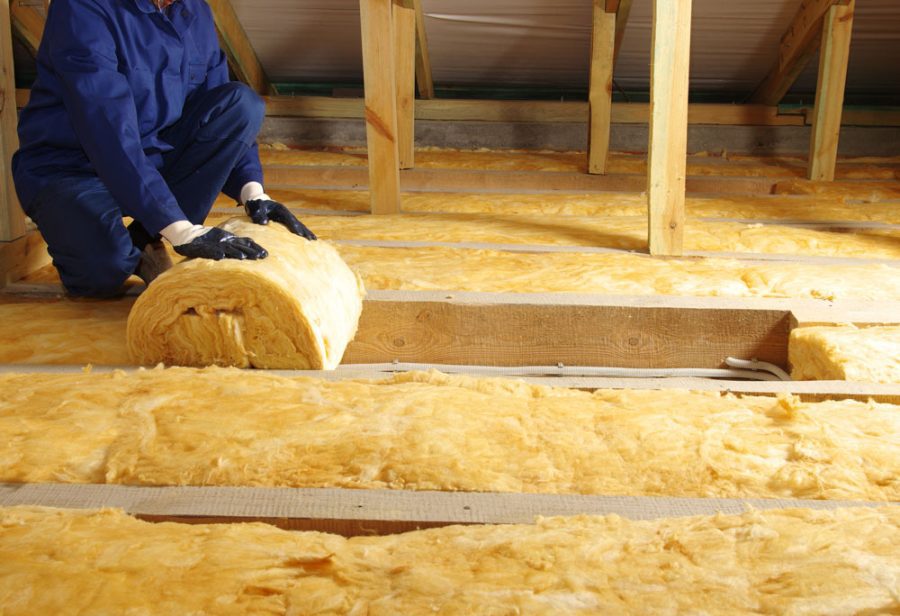
Why Professional Loft Insulation Installers Pay for Themselves
With as much as a quarter of a home’s heat escaping through an uninsulated roof, many people’s lofts are the worst places for heat loss. If you want to save money on energy costs, increase comfort, and decrease carbon emissions, adding or improving the insulation in your loft is a great place to start. There are several good financial reasons to hire expert loft insulation installers right away, even though some homeowners think about doing it themselves.
No matter how convenient it may be, hiring professional loft insulation installers is essential to getting the job done right, safely, and to the required standard to achieve the full savings potential of the materials. From the quality and lifespan of the installation to the payback periods and access to support schemes, this article lays out the practical details of saving money through properly installed loft insulation.
The ways in which loft insulation lowers energy costs
Loft insulation is effective because it forms a thermal barrier, which reduces the rate at which heat can be transferred from the chilly interior rooms below to the chilly attic above. Your heating system will have an easier time keeping you warm in the winter because of this. Additionally, it can aid in summertime temperature control by decreasing heat gain via the roof. Less energy is needed to heat and, in some instances, chill the room.
Type of property, current insulation levels, and heating system all have a role in determining the magnitude of the savings. Saving two hundred to four hundred pounds per year on energy bills is possible for a typical gas-heated home in Great Britain by insulating the loft to the necessary depth, with the biggest absolute savings occurring in detached homes. Significant yearly savings are possible even when upgrading from a thinner layer to the current suggested grade.
When the insulation is built correctly, it can last for decades, so these yearly savings add up to a significant amount. The upfront cost is typically recouped in just a few heating seasons, so hiring experienced loft insulation installers is a wise investment that pays for itself over the long run.
The significance of expert installation for cost reductions
Assuming proper installation with uniform depth, complete coverage, absence of gaps, and compression, the theoretical savings from loft insulation are as follows. In actuality, this is trickier than it sounds due to obstacles like water tanks, chimneys, electrical wires, and unsightly eaves that are present in most lofts. Insisting on professional loft insulation installers means navigating these complications without exposing any potential heat escape sites.
Condensing insulation around impediments or leaving uninsulated spaces behind pipes and along the loft floor’s perimeter is a typical do-it-yourselfer error. The thermal performance of the material is negatively affected by compression, which thins it down, and thermal bridges, which are created by gaps, weaken the installation as a whole. Expert loft insulation installers know exactly how to cut and fit the material so that it fits snugly without gaps, keep the material at the correct depth across the entire area, and save enough ventilation to prevent condensation.
The right tools and supplies are also brought by expert loft insulation installers. Although rolls of insulation may not be the best option for bigger or less uniform lofts, blown or loose-fill insulation can be applied evenly with the right tools and expertise. Similarly, there are some roof designs that require more complex insulation than just a blanket, including flat roofs or rooms-in-the-roof. To safeguard performance and warranty, it is important to hire expert loft insulation installers who will select the appropriate system and install it according to manufacturer and building regulations.
Durability, upkeep, and expenses saved
Loft insulation is an excellent long-term investment because it reduces energy expenses now and protects against costly repairs due to improper installation. Dampness, mould, or wood rot in the roof structure might result from poorly installed insulation, which limits airflow and traps moisture. It may be necessary to remove some or all of the insulation in order to fix these issues, which may be rather costly and would cancel out whatever savings you may have had initially. By evaluating ventilation, vapour management, and moisture risk, professional loft insulation installers lessen the chances of these issues developing.
Professionally installed high-quality materials also have a tendency to resist settling, drooping, and disturbance for a longer period of time. The thermal performance of insulation is preserved from one year to the next when it is left in place and kept at its specified thickness. Because the initial investment will continue to yield savings for many years to come, the payback period will be longer in your benefit. When compared to this, the cost to fix or repair a poorly executed DIY project can double in a few years, postponing the net benefit and virtually double the cost.
Indirect savings should also be taken into account. It may be less tempting to crank up the thermostat if the loft is well-insulated and the entire house feels warmer and cosier. In the event that you ever decide to sell your property, it may increase its value and appeal thanks to an improved Energy Performance Certificate rating. The economical rationale for hiring expert loft insulation installers instead of taking shortcuts is strengthened by these advantages, which are more difficult to measure accurately.
Return on investment and efficiency
Professional loft insulation can cost anywhere from seven hundred to slightly over a thousand pounds for a typical three-bedroom semi-detached home. The exact amount can vary depending on the property’s size, accessibility, and the chosen system. Homes with smaller terraces tend to be less expensive than detached ones with greater loft areas. Compared to other types of home upgrades, even the most expensive ones often have a relatively quick payback period.
A detached house that saves about 300–400 pounds a year on energy bills might pay for a professional installation that costs about 1,000–1,200 pounds in about three to four years, according to representative savings. The payback period for a semi-detached or terraced house is comparable to that of a single-family home, with the exception that the installation costs are smaller. Insulation keeps on saving money year after year after this period ends, practically for free.
The return on investment can be even faster when you include the impact of increasing energy costs. Insulation pays for itself faster when the price of gas and electricity per kilowatt-hour rises, making every unit of heat conserved more valuable. In order to help you understand the possible return on investment before making a commitment, professional loft insulation installers can provide bespoke estimates. These figures are based on your existing costs, property type, and the intended insulation depth.
Convenience, assurance, and access to plans
Expert loft insulation installers can also help you save money by gaining access to programs and tax breaks that do-it-yourselfers might not have. Accredited contractors are required to install certain government or utility-backed programs in order to qualify for grants, subsidies, or zero-rated value added tax. These can greatly lower the homeowner’s net cost, which improves the project’s economics.
In addition, most reputable loft insulation installers will offer some kind of warranty or guarantee on the materials and the installation itself. You can avoid paying the whole amount out of pocket if an issue develops because there is a well-defined process for fixing it. In contrast, if you install the system yourself, you’ll be solely responsible for fixing any problems, underperformance, or damage that may arise. With the mix of upfront savings from plans and peace of mind from warranties, professional installation is often the better financial decision for many homeowners.
Lastly, we have the time and risk value. You run the risk of skin and lung irritation from insulation materials, electrical cables, exposed timbers, and falls while working in a loft, which is already a physically demanding and dangerous environment. Expert loft insulation installers have the proper safety equipment and are skilled at working in tight, inconvenient places. The cost-effectiveness of hiring a professional is further enhanced by the fact that you won’t have to worry about injuries, lost time, or expensive specialised equipment.
In summary,
Having loft insulation installed by a professional can help you save money in more ways than just your energy bills. This is to make sure the insulation does its job, doesn’t wear out after a few decades, doesn’t need expensive repairs, and can get the funding it needs. If homeowners choose professional loft insulation installers, they can reap the full benefits of the measure, which often have payback periods of only a few years and savings that last much beyond the initial investment.